
22 October 2009

Bike Lanes Create Jobs

Provincial Bike Lanes
According to the Danish daily Politiken cyclists can look forward to more money for cycling projects across the nation.

The political parties behind the traffic plan earlier this year are ready to push 100 million kroner [$20 million] forward in order to start cycling projects earlier. Projects scheduled for much later can be completed this year.

The main reason is to give the building industry a boost and create jobs as well as to be able to purchase materials that are cheaper because of the financial crisis.

Basically... bike lanes being built to help the economy in this time of financial instability.

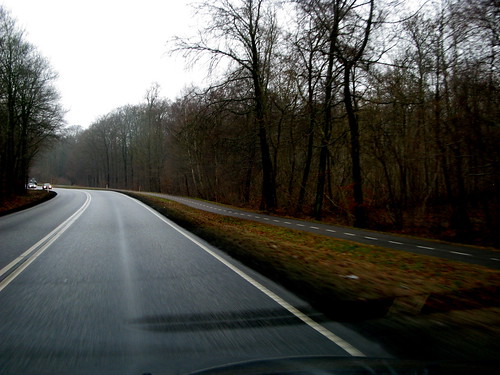
The photo, above, is a part of the national cycle route formed in the early 90's. It is standard in the countryside that there are bike lanes between towns. This is is between a town of 7000 people and another of about 10,000. The paths are set away from the road in rural areas, but still run parallel.

16 thinking out louds:

portlandize.com said...

Heh, here the "official bike routes" between cities are the (sometimes non-existent, and otherwise 3-foot-wide) shoulder on the side of the highway. Doesn't exactly encourage anyone to leave the city on a bike.

Frits B said...

As David Hembrow points out today on his website, even a relatively small town like Assen, Holland - which already has an extensive bike network - has just voted for almost a million Euro to improve existing but older paths and lay down new ones (one of which leads directly from a new residential area to the local IRS office but that's probably just a coincidence). In terms of bike paths, a million Euro goes a long way.

Saschi said...

Experience from Germany: building extra bike roads out of town should be the extreme exception for avoiding very big and fast roads only. Reason: a) inhomogeneous bike traffic: bikers on race bikes or fast mountain bikes are incompatible with old people, pedestrians and children on bikes. VERY dangerous (also if you do not like the word)
b) existence of a bike road and cyclists NOT using it (for security reasons as cited above)make car drivers extremely aggressive (no wonder when they read in the newspaper that this lane cost half a million and these bastards are not even using them)
c) Throwing a lot of money on the problem of bikers on the road (get them out!) instead of getting more bikers on the road.
d) due to high follow up costs of maintainance (snow ice, debris these lanes are poorly maintaines and therefore dangerous and unattractive
The solution is the same

Better solution same as in the city: slow down car traffic and space for bikes ON the road, more cyclists on the road. ( I learn that bikes and cars get along pretty well when there is no extra bile lane, that is true also for countries like Italy where drivers will pass you by quite closely but they are in no way aggressive like in Germany when they feel the law is on their side

Mikael said...

amazing to see that this strange vehicular cycling cult lives on after 35 years of not be able to prove that the theory works.

solution to a: market cycling properly to encourage the masses to ride and thereby reducing the aggressive attitude of bike freaks riding fast. build infrastructure in order to encourage the masses to ride and to reap the massive societal benefits that follow.

solution to b:
see A.

solution to c:
See A.

solution to d:
stop thinking that maintenence is expensive. it's not. even in small towns in denmark and sweden they have snowploughs for bike lanes. it's simple.
also, see A. encourage the masses to cycle on separated infrastructure creates the demand for maintaining the infrastructure. the money saved on health care, etc etc, can be used on extra maintenence.

there's a reason why bike lanes and infrastructure are being built all over the world. it encourages people to cycle, the cost-efficiency is massive for a city or town and nobody has ever presented any other alternative that is proven to work.

Saschi said...

Look Michael, I really appreciate your blog, but sometimes you demonstrate a kind of ridiculous arrogance that is very hard to bear. I ride a bike since I am 6, I own 19 bikes, among them very slow ones, I ride in town in summer winter on Dutch bikes, trikes, MTB, Race bikes and baloon tire bikes all year in any kind of weather and a lot of miles while you jet around the globe to spread your wisdom that the only decentr way to use a bike is in high heels. I think and talk with people about biking all the time, so please do not imply I am an idiot. Joining the argument I forwarded are 17000 cyclists in Germany who signed a petition against the enforced use of bikle lanes. Fact is: bike lanes have been built to get bikes off the street, not to encourage biking. This shows. These stinking bike lanes we have in most of Germany are death traps. We definitely want the street/road, not a stinking bike lane.

Sean said...

I read Saschi's post twice, but still find the logic difficult to understand. A bike path is dangerous because cyclists may ride at different speeds, but a shared roadway where cyclists and drivers are certainly traveling at very different speeds is safer?

Drivers get enraged about tax money for bike lanes, but stay carefree about the cyclist on the shared road, riding in front of them and blocking their way?

Also, if an accident did occur, wouldn't the results of a bike/car accident on a shared roadway likely be far more tragic than a bike/bike accident on a bike lane?

I've heard the arguments for vehicular cycling many times and, to me anyway, they are not very convincing. There's the obligatory unnamed study done somewhere by someone that bike lanes increase accidents, followed by hurt feeling about not using the "real road," and, lastly, usually, conspiracy theories about someday the road will be taken away from us.

From where I live, in a major US city, and from what I see here, vehicular cycling isn't a way to build cycling, it's an environment where most people view cycling as dangerous and unpleasant, and they never get on a bike.

Mikael said...

Saschi, I'm sorry to read the first part of that comment, but i'll stand firm on the simple fact that your theory about vehicular cycling is nothing more than a theory, after 35 years.

It is a male-dominated, adrenaline-based theory that will never encourage the broader population to ride bicycles. There's nowhere in the world that it's happen.

You've had 35 years to prove it, to no avail.

Now, more than ever, it's all about getting people to choose the bicycle as transport, to fight obesity, pollution, c02 etc etc. The cities in the world that have high levels of cycling have done so by understanding the way homo sapiens think.

Homo sapiens will never, in large numbers, take to the streets to mingle happily with cars and make vroom vroom sounds as they ride, pretending they're cars.

If you're building the wrong kind of bike lanes, then there is help at hand to build them properly.

David Hembrow said...

The post that Frits refers to is here. It shows how our local government is funding cycling in part as an economic stimulus.

While I'm definitely enthusiastic about cycle paths, I think I have some idea where Saschi is coming from. The fact is that when I lived in the UK I too avoided cycle paths, as those which were beneficial to the cyclist were rather rare.

I've seen German cycle paths, and can see why he considers them to be inferior to riding on the road (I'm collecting material for a video comparing them to Dutch cycle paths, but for now just take a look at 1:20 and 8:30 of this video.

However, I'm afraid that German cycle paths do not represent the best quality. Proper cycle paths are absolutely wonderful as you'll see in much of the rest of that video and elsewhere. My commute, for instance, is much faster with the cycle paths than it would be otherwise. Using them, I avoid all the traffic lights, and take a shorter route. Often the surface is smoother than the road too. It took 51 minutes to cover my 30 km ride back home last night, roughly 28 km of which is on cycle paths.

As for winter... The cycle paths are cleared first in these parts...

Mikael said...

In a way, that's what I'm saying. If somebody gave me a glass of milk for the first time and I tasted it and it was sour, I wouldn't think milk was a good thing to drink.

I would recommend to everyone not to drink it.

If I tasted a glass of fresh milk, I might recommend it to everyone.

Some German bicycle infrastructure - but all all - may be sour, but instead of focusing on how bad it is (which certainly doesn't promote cycling, it's bad marketing), concentrate on getting better infrastructure, like we're seeing around the world.

It'll be a real shame if Germany falls far behind the rest of Europe on this front because an outdated theory.

didrik said...

I'm glad that the quality of cycle paths has been mentioned here. The die-hard VC seem to treat all cycle paths as equal and they are not. Here in the states, the VC argument holds more water because our cycle paths are poorly designed. E.g. our bike lanes often end 50ft from an intersection with no further guidance on which lane to move into to proceed through the intersection or make a left turn. There is no guidance implied in the design on how cyclists and cars should mix and then "unmix" on the other side of the intersection when the bike lane reappears. In other words, at the exact point where the traffic situation gets complex, the street design says, "good luck kid, see you on the other side--if you make it."

This doesn't mean, however, that cycling infrastructure is a stupid or dangerous idea. It means the infrastructure needs to be better designed. Especially at intersections of traffic.

Saschi said...

Peace brothers! Let me explain what I mean: I speak from a German perspective only, where I have my experience. Historically bike lanes have been built for getting bikes off the road to increase speed of car traffic. In Germany you are fined for not using even the worst bike lanes. Planning guidelines for bike lanes count on a bike speed of 12 km/h which is slow even for the slow bike movement. Most bike lanes will be around 1m wide. Since bike lanes accompnying streets create very wide detours for bikes (having to wait 2 red lights for a turn) cyclists will use these lanes in the wrong direction all the time. Most accidents occur with drivers crossing the bike lane in a right turn. I have 26 such crossingas on my commute to work. Bike lanes create the expectation that bikes get off the road. Most drivers dont see the bike lane as the stop point but the street = each exit from a estate is an additional threat.
Conclusion: on bike lanes (in Germany) cyclists are confronted with hard to anticipate moves from all directions with very few room to manouver. This is hard to handle even at speeds below 25 km/h. Electric power supported bikes will hugely increase this problem in the next years. Lanes are already too narrow for the existing bike traffic, even more so with trailers etc.. Bad as they are they nevertheless create the expectation to get off the street.
IF you mean by "bike infrastrcture" street like "bike streets" of at least 5 m in width I am all with you, but that will mean just devoting streets to bike traffic (as in fact I have seen in Copenhagen). Given geography in German cities there is mostly no room to build something like that besides the street (would have to lay down the houses for that)
Why using the street is less dangerous:
1) width = room to manouver
2) I personally do not know a single case where a cyclist has been run over by a car from behind in contrast to many accidents between cyclists on bike lanes with severe consequences and accidents with cars running over bikes in right turns crossing the bike lane. Moving in the same direction along a predictable line with some room to manouver = safety.

Car traffic speed is critical. Lets go for a enforced 30km/h speed limit in all citry streets exept few main connections. THis will reduce the difference between bikes and cars to a safe level.
Make bikes visible, claim the street.
This is not to say that I am not for VERY wide sidewalks for children, people who do just not want to use the street etc. But being forced to use towel-wide lanes in poor quality is simply disgusting.
AND I can not understand why we should spend millions on bike lanes when all that is needed is enforcing a very moderate speed limit, redicating some STREETS as bike streets (e.g. by allowing only resident car traffic) and just aking on motorists that do not behave responsibly on a daily basis.
Mickal, your blog estethically does a lot to promote cycling and I also think that "slow cycling" sends a corerect message to some cyclists. I know you know a lot about cycling and I think we are on the same side. But when promoting bike lanes please list the conditions WHICH bike lanes you mean with that, in order not to send the wrong message. This wrong message would be: bikes do not belong on the street but on the sidewalk. For sure not your intention. And for cyclists in most of germany celebrating bike lanes uncritically is just offensive given our long efforts to get rid of that stupid obligation to use even the most ridiculous strip of debris.

Saschi said...

P.S.: We had a number of bike lanes build along country roads in the last years in our area.
Experiences are not good. Much increased car speed on the road, intersections between lanes and roads dangerous, dangerous bottlenecks everywhere, much poorer surface compared to the street, etc. etc.
Why not apply your own argument here? Put more cyclists on the road so they will be anticipated? Instead you support getting them off the road thereby assuring cars that they can go fast safely....

P.P.S.: 2/3 of your posts very rightly claim that cars are the problem, tha itas the cars who are dangerous. So, why giving them their way and granting the street that we have also paid?

P.P.P.S.: How come that the German cycling clubs are against the obligatory use of bike lanes while the all mighty German Automobile club (ADAC) is all for it and promotes bike lanes?

Saschi said...

Illustration of the discussion from Vienna:


http://cyclingisgoodforyou.blogspot.com/2009/10/major-bike-paths-in-vienna-uncomplete.html


Conclusion: Bike pathes are ONLY useful under the following conditions:

One way: 4 m wide (two bikes with trailers)
Two way: 5 m wide

Excellent planning at intersections OR

completely seperated from car traffic AND playgrounds, shopping areas, dog walk areas etc.

Anonymous said...

> Conclusion: Bike pathes are ONLY
> useful under the following conditions:

> One way: 4 m wide (two bikes with
> trailers)
> Two way: 5 m wide

I know lots and lots and lots of them.
Even wider ones.
Use them everyday. On a bicycle.

They are called "Roads".

Mikael said...

Ride on those roads if you like. If you want to see vast numbers of your fellow citizens taking to the bicycle, advocate for bicycle infrastructure.

Saschi said...

As you see I do. But conditionally, not unconditionally.
If I am not fined for using the street/road (as I am in Germany, it is against the law to not use even the crappiest "lane"!) but have free choice I am all for as much bike infrastructure as possible.
Using an euphemistic "poorly designed" excuse for the death traps they are forcing us to use here is not helpful.
Bottom line:
support REAL bike infrastructure
abandon forced use of "bike lanes"
claim (ALSO) the right to be ON the street
be realistic about the real (not negative campaigning) dangers of these crappy "lanes"
ride your bike with the common sense and care your neighbour deserves (light, brakes, appropriate moderate speed, no earplugs)
Can we agree on that agenda?